
Open-source AI coworker and workspace with a holistic context graph.
A Claude Cowork-style open-source alternative for builders who want local-first work memory around their AI agents.
OpenLoomi connects your work tools so AI can understand people, projects, decisions, and follow-ups before it acts with human approval.







Download · Star on GitHub · Open an Issue
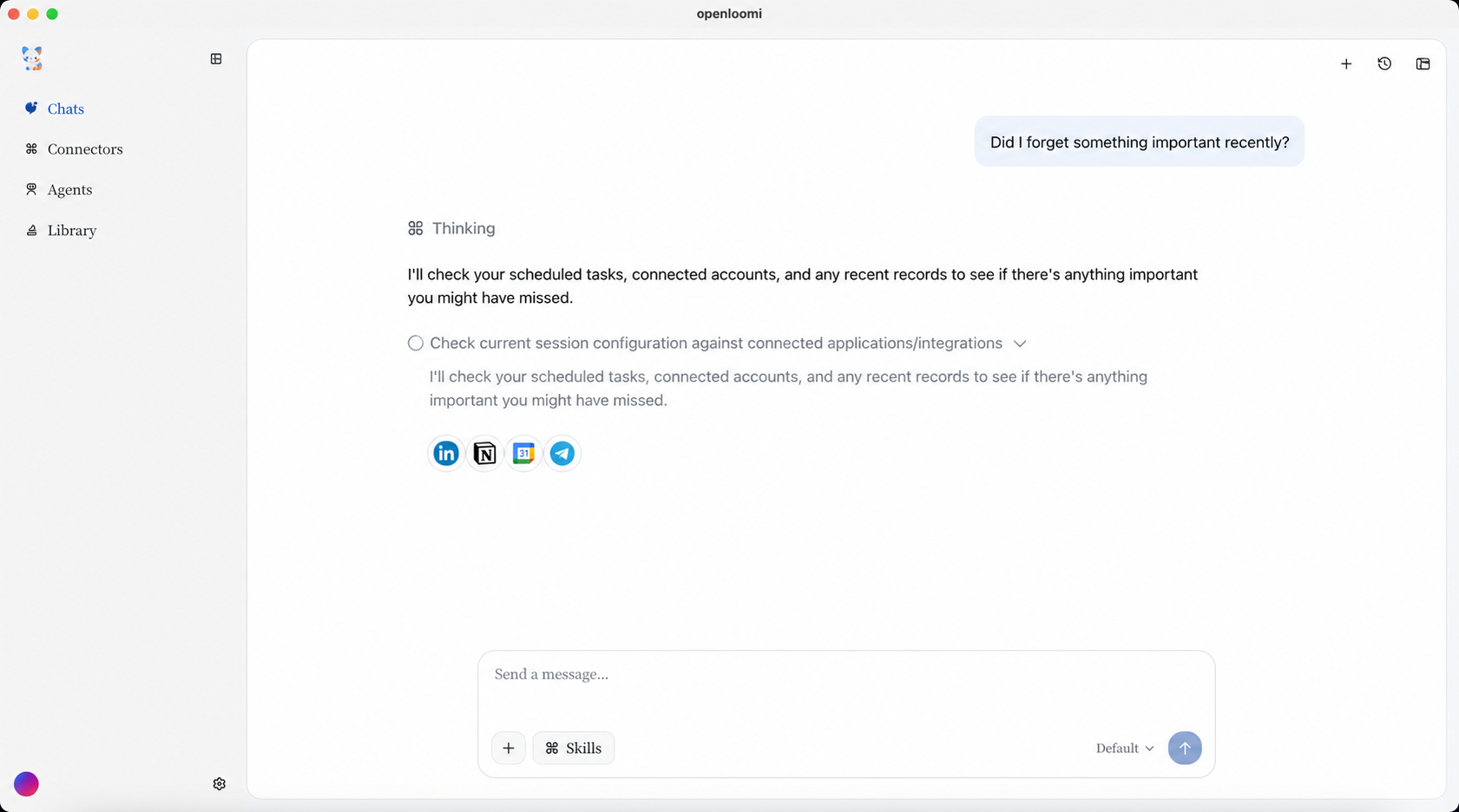
Ask once. OpenLoomi checks recent work context, connected tools, and open loops.
Quick Start
Download the current desktop release directly:
| macOS Apple Silicon | macOS Intel | Linux AMD64 | Linux ARM64 | Windows |
|---|---|---|---|---|
| .dmg | .dmg | .deb | .deb | .exe |
Full documentation is available at openloomi.ai/docs.
Connect or import one real work source, then try one work-memory question:
What changed since yesterday, who is involved, and what should I follow up on?
Develop locally
git clone https://github.com/melandlabs/openloomi.git
cd openloomi

cp apps/web/.env.example apps/web/.env

# Set your AI provider keys in .env:
#   ANTHROPIC_API_KEY=sk-ant-...
#   LLM_API_KEY=sk-...

pnpm install
pnpm tauri:dev
Requires Node.js 22+, pnpm 9+, and Rust 1.75+.
If the answer lacks useful sources, the permission model feels unclear, or the workflow still feels like a chatbot, please open an issue. That feedback is exactly what we want.
Stop Prompting From Scratch
We are building OpenLoomi because the most frustrating part of using AI at work is not always the model. It is having to explain the same context again and again.
You paste the same links, repeat who is involved, remind the agent what changed last week, and still worry that an important decision or follow-up is missing.
OpenLoomi is our attempt to make that context durable and user-owned. It turns scattered work signals into a local-first holistic context graph, so your AI coworker can work from source evidence, ask before acting, and carry the right memory into the next task.
Core Capabilities
| Capability | Why it matters |
|---|---|
| Holistic Context Graph | Connects people, projects, decisions, sources, timelines, and open loops |
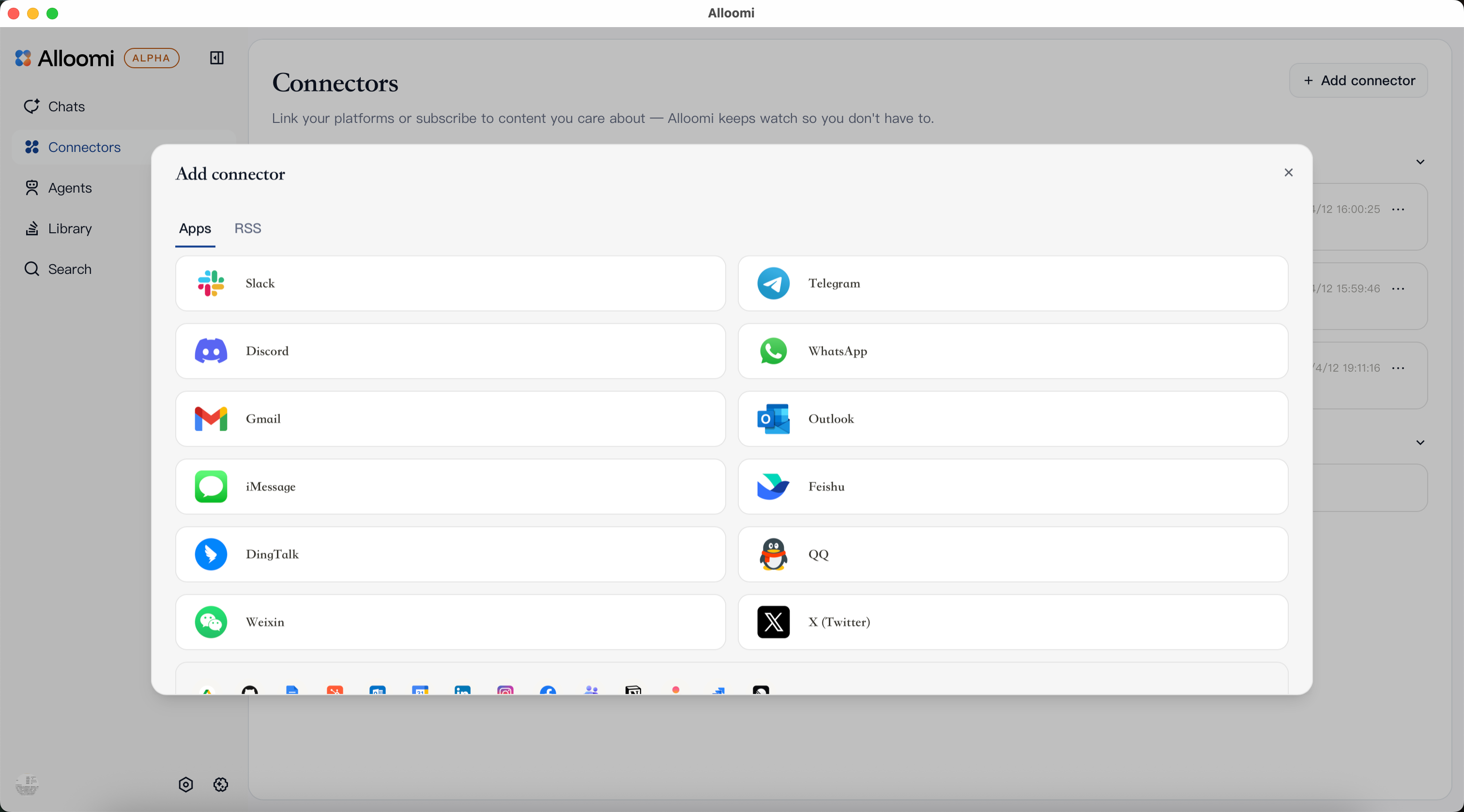
| Platform Connectors | Brings context from messages, docs, calendar, email, and project tools |
| Proactive Tasks | Turns context into briefs, follow-ups, reports, and next actions |
| Local-first Work Memory | Keeps sensitive work context inspectable and user-controlled |
| Agent-ready Context | Lets other agents start from shared work memory instead of a blank prompt |
What It Feels Like
| Ask OpenLoomi to... | It should use... | You should get... |
|---|---|---|
| Prepare my morning brief | messages, email, calendar, docs, open tasks | prioritized work with source links |
| Follow up with a customer | conversations, promises, objections, history | a draft reply for approval |
| Explain a project change | docs, chats, meetings, owners, timeline | a decision trail |
| Turn updates into a weekly report | messages, trackers, docs, events | done, blocked, decisions, next steps |
| Continue work in another agent | OpenLoomi context plus Codex, Claude Code, OpenClaw, Hermes, Cursor, or another agent | the next agent starts with the right context |
Why It Is Different
| Compared with... | OpenLoomi adds |
|---|---|
| Claude Cowork-style agents | an open-source, local-first AI coworker/workspace with source evidence and approval |
| Codex / Claude Code | workspace context beyond the repo: people, product decisions, launch context, issues, and follow-ups |
| OpenClaw | context before and after the action: why it matters, what source was used, what changed, what remains open |
| RAG / knowledge bases | work state, not just document retrieval: what changed, what is still true, and what should affect the next action |
OpenLoomi is not trying to be the agent that does every task. It is the workspace that gives agents memory, evidence, and approval.
Product Glimpses
Large GIFs are useful for demos, but they can make a README heavy. This page uses static screenshots first and links to the motion demos.
| Connectors | Actions and automation |
|---|---|
 |
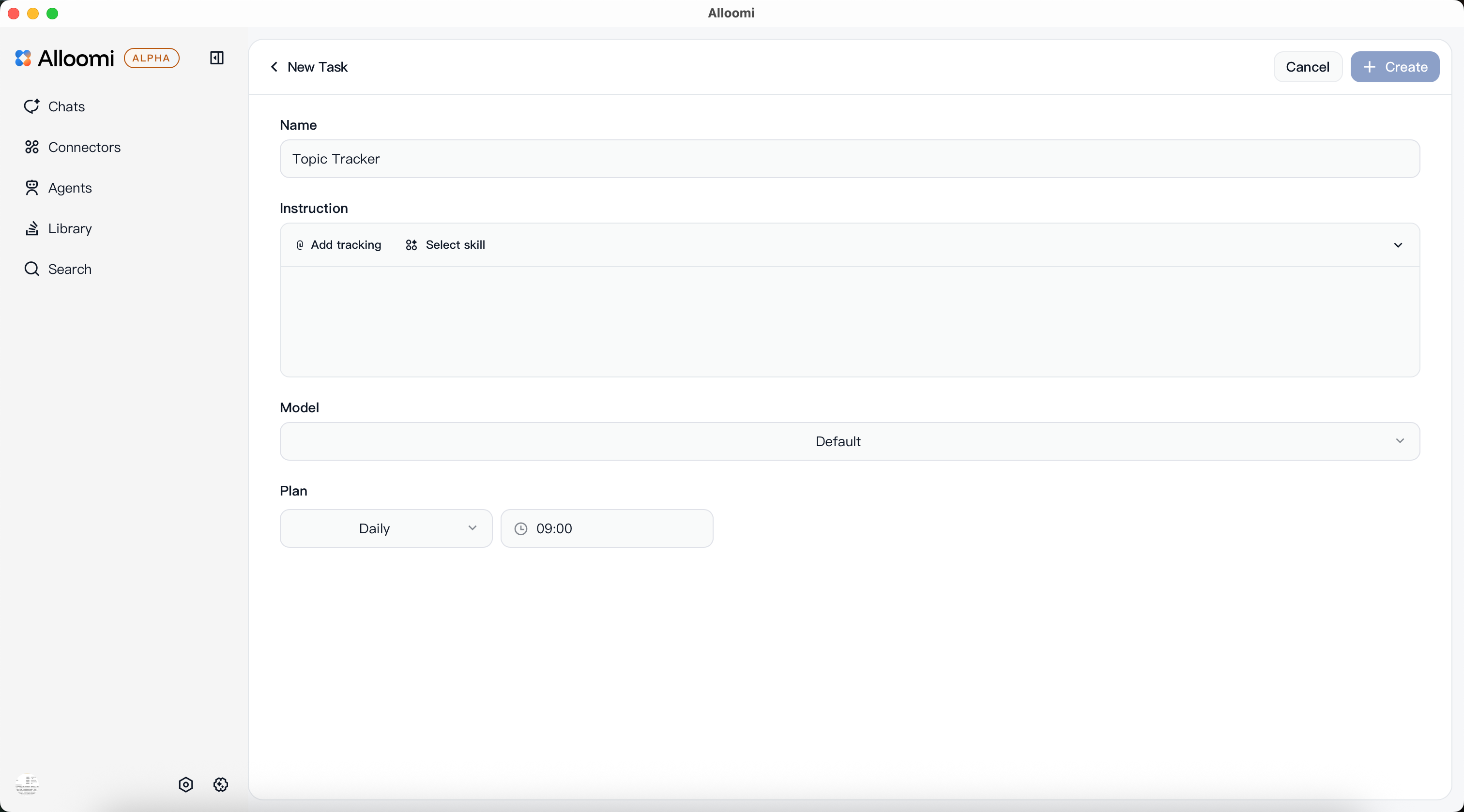 |
| Watch connector demo | Watch automation demo |


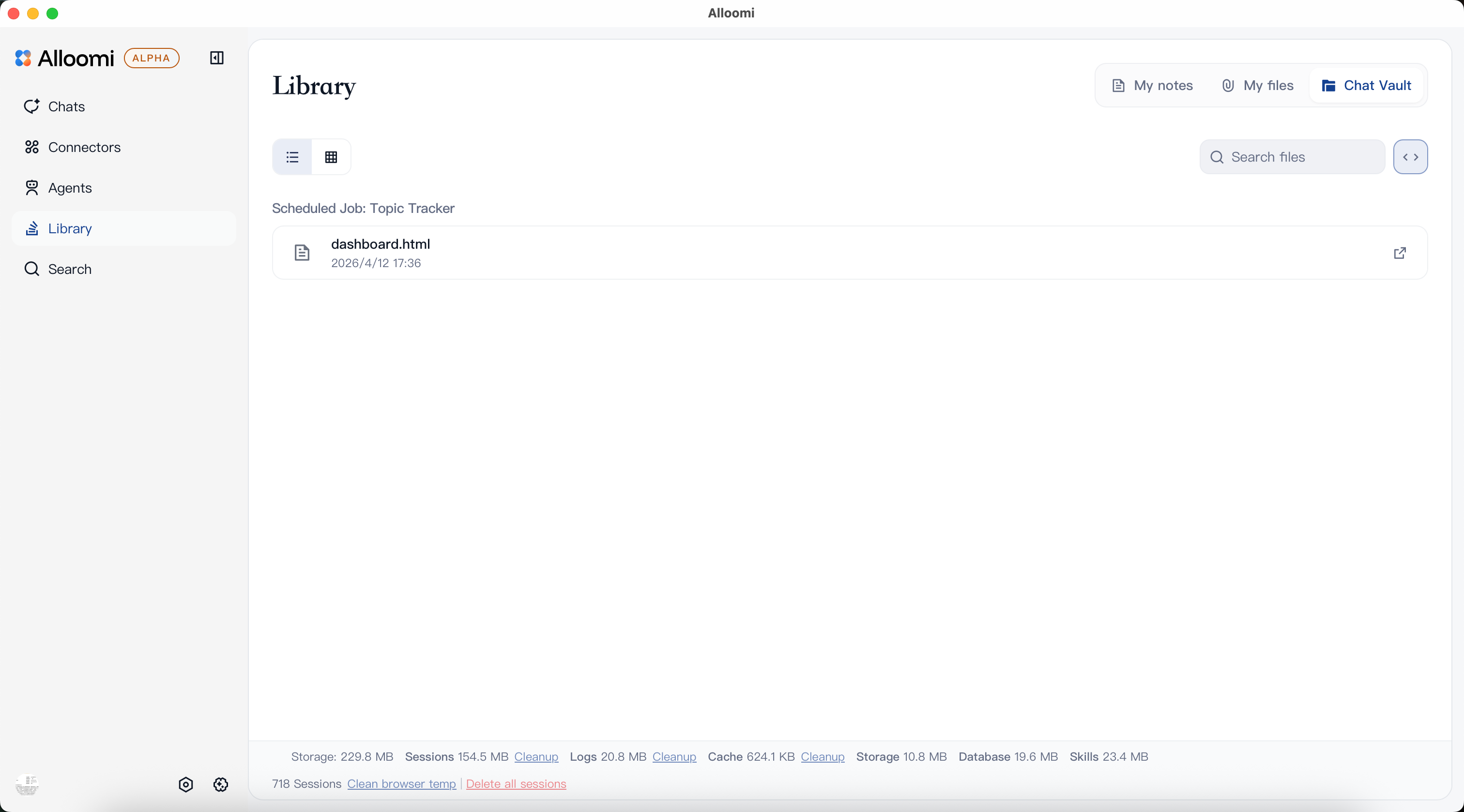
| Work library | Open skills |
|---|---|
 |
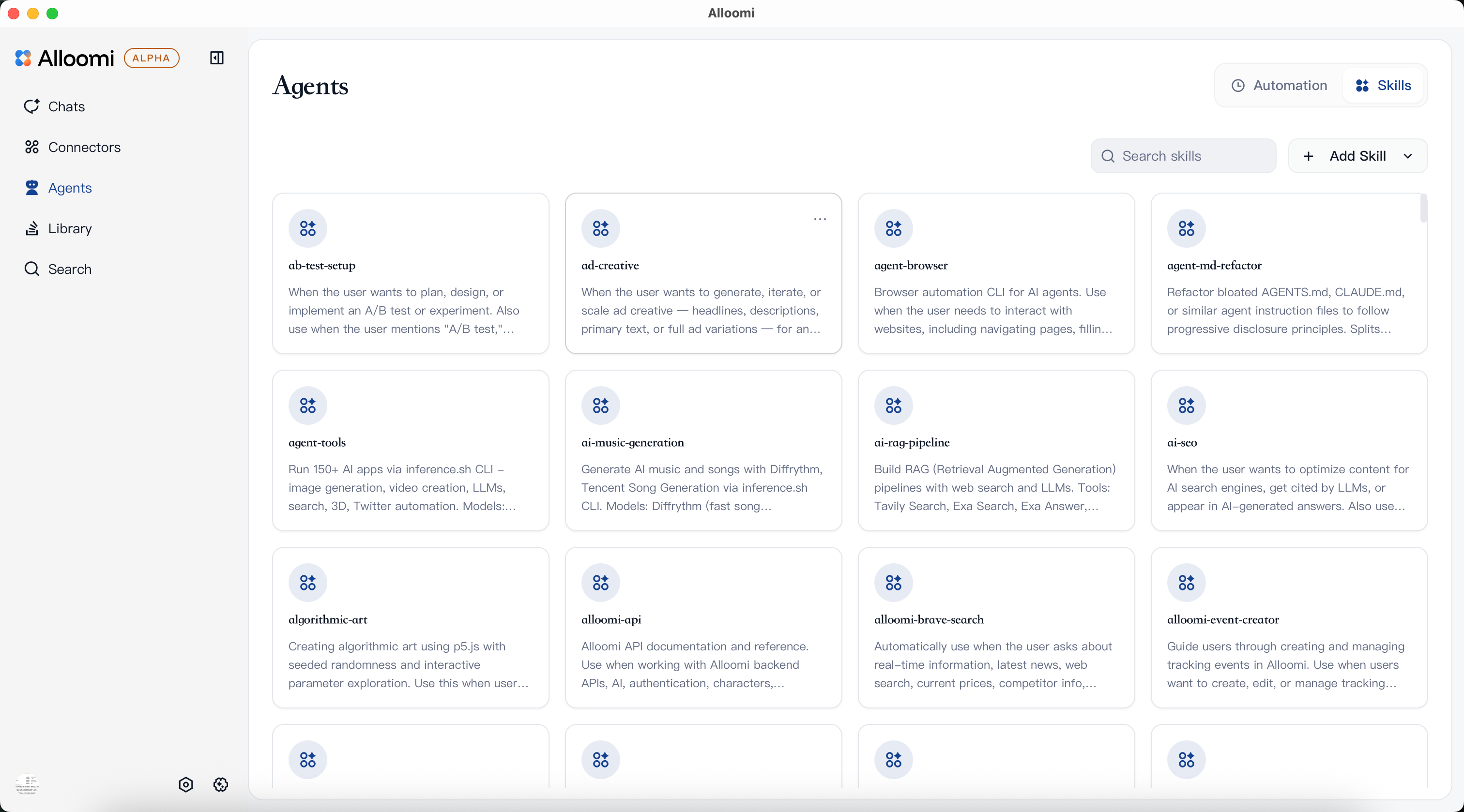 |
| Watch library demo | Watch skills demo |


Security & Trust
OpenLoomi is built around user-owned work memory, so trust is part of the product surface.
- Local-first and offline-capable: work memory is designed to live on your machine, not inside a required cloud workspace.
- AES-256 encrypted local storage: stored work context is protected at rest.
- No required public gateway: bring your own model keys and use the provider you choose.
- Auditable context access: important answers and actions should show what sources were used and why.
- Human approval for actions: OpenLoomi should draft, explain, and ask before high-impact external actions.
- Open source and inspectable: builders can review how connectors, memory, and agent workflows are handled.
When you connect cloud LLMs or third-party tools, those providers may receive the data needed for that request. OpenLoomi's job is to make that boundary explicit, user-controlled, and inspectable.
Help Wanted
OpenLoomi is early. The most useful contributions right now are sharp bug reports, workflow critiques, connector requests, and trust-model feedback.
- install failed on my platform
- connector permission was unclear
- memory source was missing or wrong
- this workflow still felt like a chatbot
- this action should have required approval
- I want OpenLoomi memory inside Claude Code, Codex, OpenClaw, Hermes, or another agent
Feedback
We're looking for people who will actually install it, connect their tools, and tell us what's broken or unclear.
- GitHub Issues for bugs, install problems, and feature requests
- Discord for discussion, questions, and help
- Email for anything else
Contributing
See CONTRIBUTING.md. Look for good first issue labels.